The Energy Cut Index

Ranking Hairstyles by Energy Use

Ever wondered how much energy different hairstyles use? While some styles might take a few minutes and a single tool, other styles can involve an hour under heat, multiple appliances, and enough energy to boil a kettle three times over.   

Well, wonder no more. The Energy Cut Index by Valda Energy ranks popular hairstyles by the amount of energy they typically require – so you can finally see what each styling routine actually uses. 
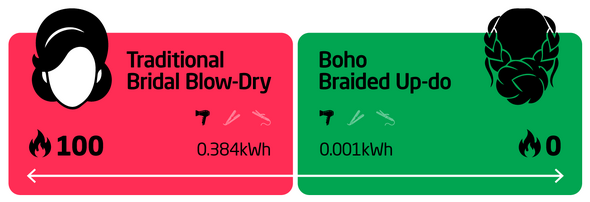
Heat styling energy use_most energy efficient hairstyle and most energy intensive hairstyle infographic

Why does heat styling use so much energy? 

Heat styling is part of many people’s everyday routine, especially hairdressers, but it can use more energy than you might expect. 

Pick up a hairdryer and you’re running anywhere from 1,200 – 2,400 watts. Add straighteners, a curling wand or a hot brush, and your routine can quietly burn a significant amount of electricity.  

The real variable isn’t the tool you use, though – it's how long it runs. Poker-straight tresses or a voluminous blowout might take 45 minutes of continuous heat. And different looks that seem relatively simple can sit at opposite ends of the energy spectrum if you break down the steps involved.  

That contrast is exactly what the Energy Cut Index sets out to show, by comparing popular hairstyles based on their typical heat styling energy use. 

The Energy Cut Index: Full hairstyle ranking

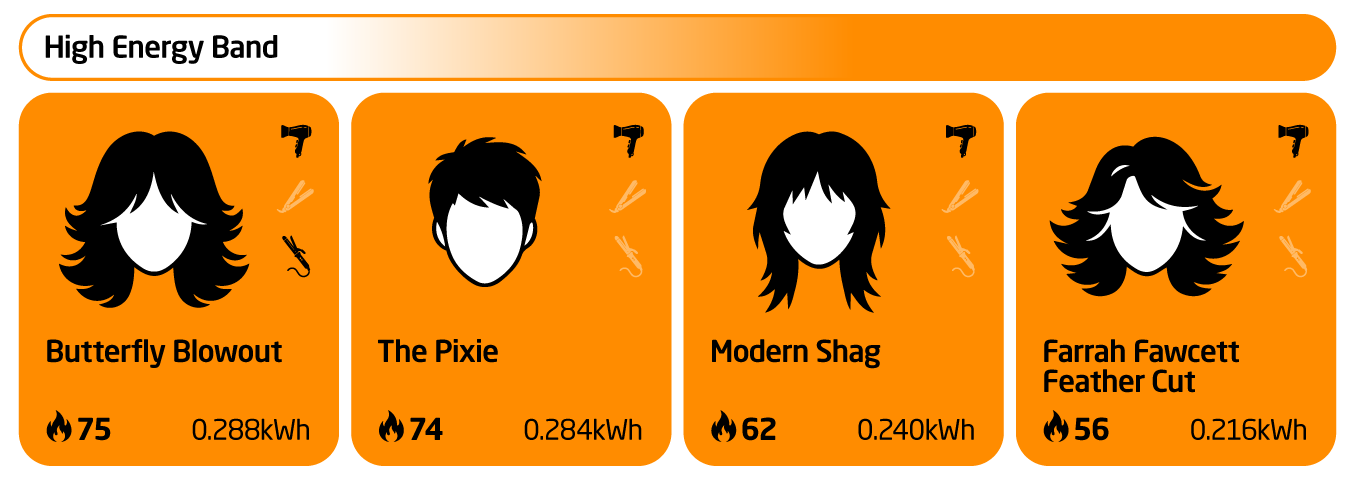
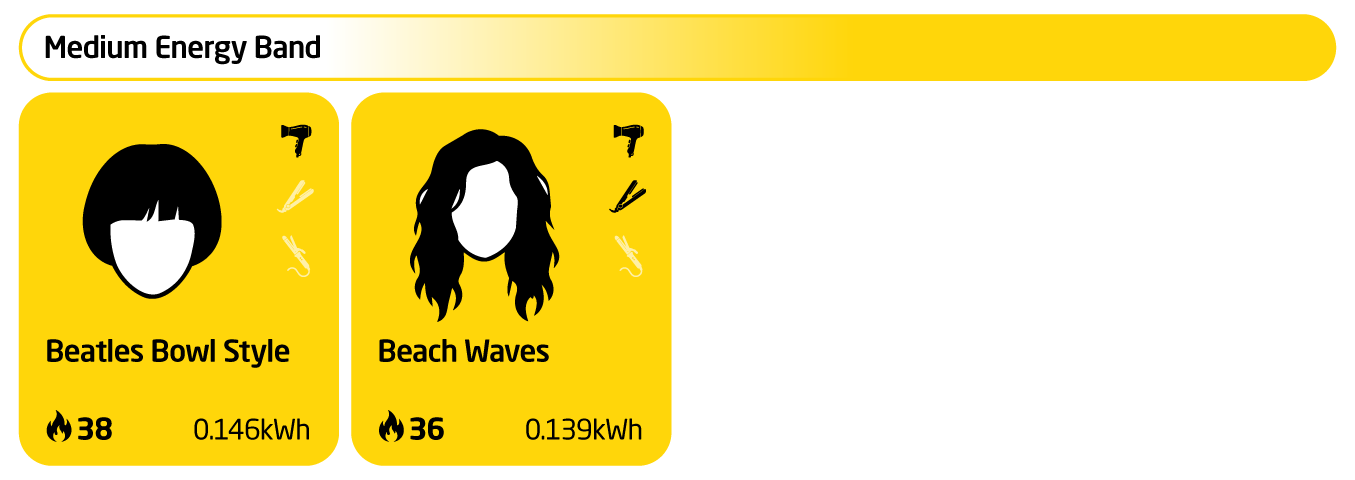
This ranking compares popular hairstyles based on the typical energy required to create them, taking into account the heated tools used, styling time and how they are usually worn in real life. It reflects everyday routines rather than controlled lab conditions, giving a more realistic view of how energy is used across different looks.

Expand each option below to reveal which hairstyles require the most to least energy.


Energy Cut Index banner_explains the higher the score, the more energy the hairstyle consumes

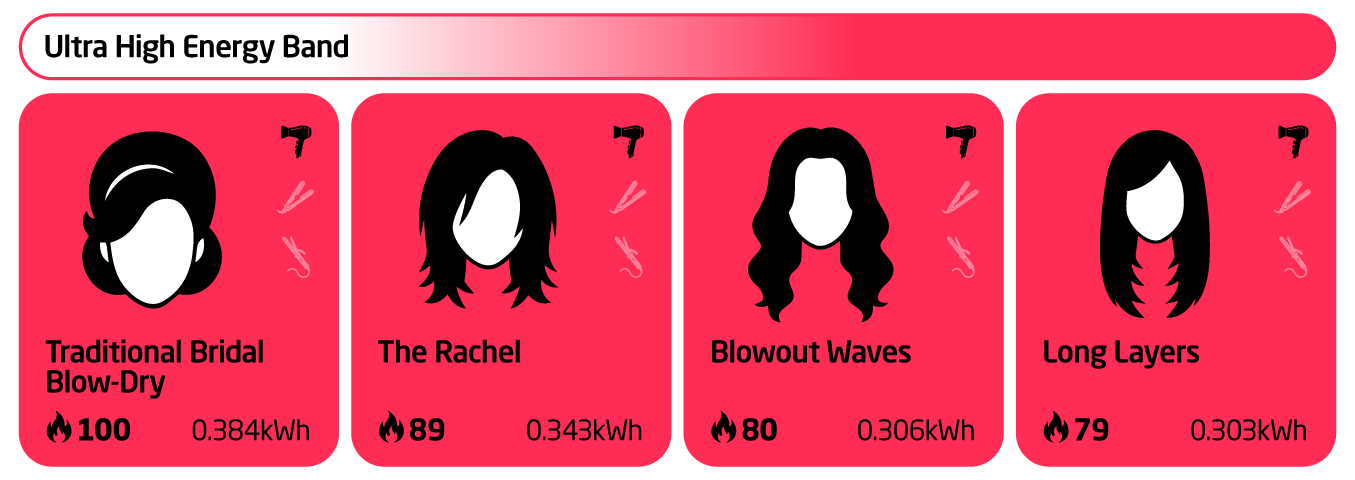
Energy cut index most energy intensive hairstyles infographic showing traditional blow dry, "the Rachel", blowout waves and long layers


Energy Cut Index high energy use hairstyles infographic showing butterfly blowout, the pixie, modern shag and Farrah Fawcett feather cut


Energy Cut Index medium energy use hairstyles infographic showing Beatles bowl style and beach waves


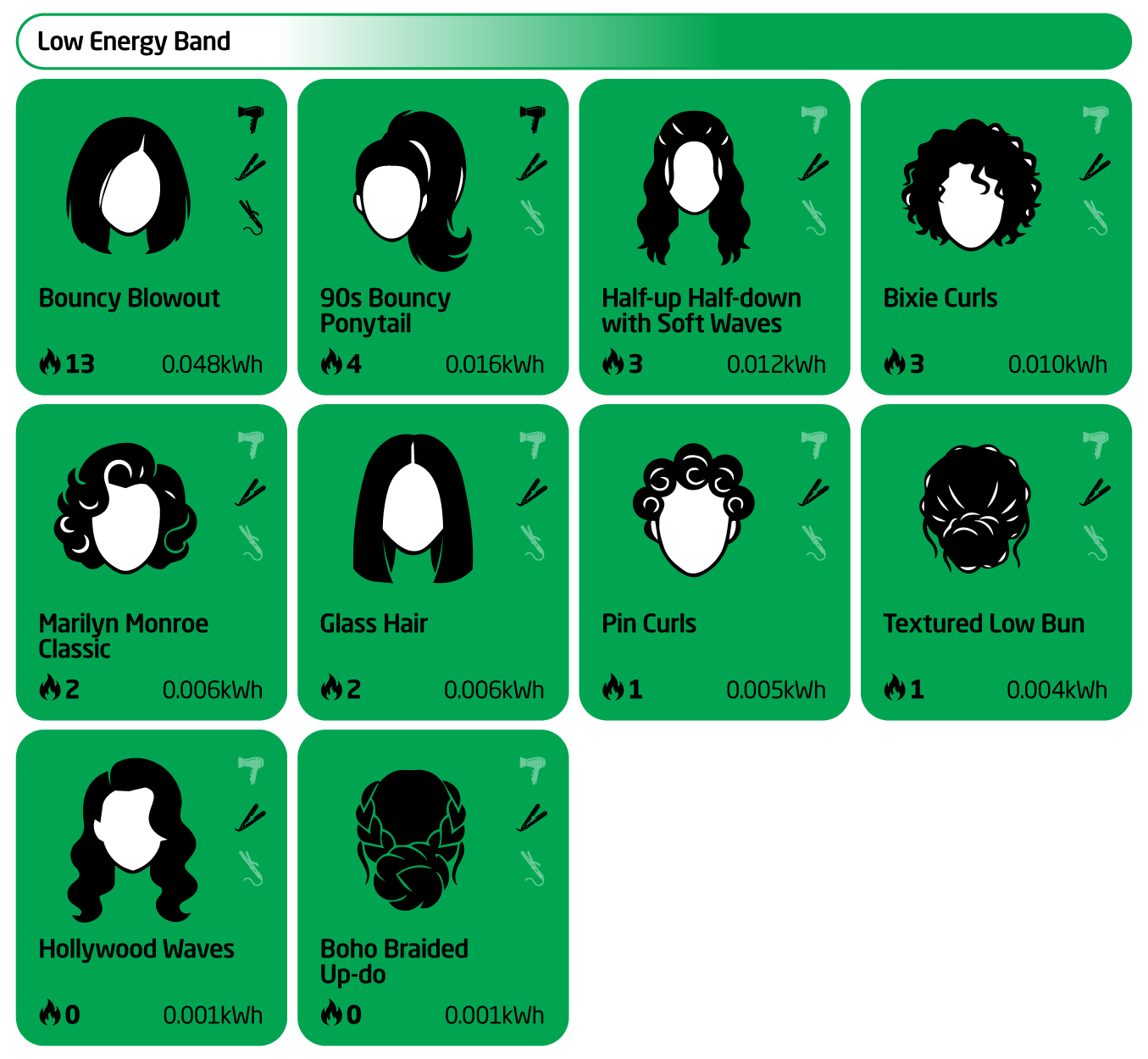
Energy Cut Index_least energy-intensive hairstyles_infographic showing bouncy blowout, 90s bouncy ponytail, half-up-half-down with soft waves, bixie curls, Marilyn Monroe classic, glass hair, pin curls, textured low bun, Hollywood waves,and boho braided up-do


Energy use is calculated using typical tool wattage multiplied by average styling time for each look; see the methodology section below for full details. 

What the Energy Cut Index shows: key findings

  • The Traditional Bridal Blow Dry ranks as the most energy-intensive style overall, using around 0.38 kWh per session, placing it at the top of the ultra-high band.  
  • Among everyday styles, The Rachel leads the ranking at approximately 0.34 kWh, followed closely by Blowout Waves and Long Layers, confirming that volume-driven looks require more time under heat.  
  • At the opposite end of the scale, Pin Curls use just 0.005 kWh, making them one of the most energy-efficient styles in the index.  
  • The gap between styles is significant, with the Traditional Bridal Blow Dry using over 70 times more energy than low-energy styles like Pin Curls.  
  • Not all occasion styles are high-energy, with looks such as Hollywood Waves sitting in the low band, showing that more energy-efficient options are available without compromising on finish. 


“Getting married recently opened my eyes to how much goes into creating different hairstyles. It’s not just skill, there’s a surprising amount of energy and effort behind every look, something the Energy Cut Index helps put into perspective.”

Zoe Mortimer - HR Director

The eco-friendly wedding hair ranking: bridal styles by energy use 

Your wedding hair might be the most photographed look of your life, but have you ever wondered how much energy goes into creating it? 

We were feeling curious - and turns out, there’s a huge variation here too. From loose, effortless waves to a full traditional bridal blow dry, we took a focused look at popular bridal hairstyles by energy use. 

So, if you’re planning a wedding, booked to do the styles, or simply curious about the impact behind the final result, our Energy Cut Index offers a new perspective on familiar styles, highlighting how different approaches to styling can vary in energy use. 

Energy Cut Index_bridal hair_most to least energy-intensive hairstyles_infographic showing traditional bridal blow dry, half- up half down with soft waves, textured low bun, Hollywood waves and boho braided up-do

Key Finding

The Half-up Half-down style with soft waves uses just 0.004 kWh per session, making it one of the most energy-efficient bridal options despite its polished, occasion-ready finish. 

What the Energy Cut Index means for your salon 

Hairdressers and salon professionals work with some of the most energy-intensive tools of any small business – and unlike a kettle or an oven, they’re often running back-to-back, all day. 

The Energy Cut Index is not about limiting creativity or changing the services you offer. After all, style is down to client preference! Instead, it’s a way to better understand where energy use occurs.  

Having a clearer view of where those energy-intensive moments happen can help you think more strategically about how you use equipment throughout the day. This could mean reviewing how time is allocated to certain styles, or simply becoming more aware of patterns in day-to-day operations. 

Access to reliable data can also play a role here. Tools such as smart meters allow businesses like yours to track energy use in real time, helping to identify trends and manage costs more effectively without impacting the client experience. 

How we built the Energy Cut Index: Methodology 

The hairstyles included in the Energy Cut Index were selected based on cultural relevance, recognisability and current trends. This includes a mix of well-known iconic looks and styles influenced by recent social media and celebrity trends. 

To estimate energy use, each hairstyle was broken down into the typical heated tools required to create the finished look. Average wattage for these tools was sourced from manufacturer specifications, while styling time was estimated using professional tutorial videos to reflect how each look is created in practice. 

Energy consumption was then calculated in kilowatt-hours (kWh) by combining tool wattage with average usage time for each step in the styling process. Each hairstyle was scored on a scale of 1 to 100 based on its relative energy intensity and grouped into energy bands ranging from low to ultra-high. 

The index is UK-focused and based on typical styling routines rather than controlled laboratory conditions. It is designed to reflect how hairstyles are commonly created in practice, using a consistent methodology across all styles to allow for a fair comparison. 

Frequently asked questions

The Traditional Bridal Blow Dry uses the most energy in the Energy Cut Index, at around 0.38 kWh per styling session, placing it at the top of the ultra-high band. This reflects the extended time under heat and multiple styling steps typically required to achieve a polished, long-lasting finish.  

 Among everyday hairstyles, The Rachel ranks highest at approximately 0.34 kWh per session, followed by other volume-driven looks. These styles rely on longer blow-drying and shaping time, which increases overall energy use. 


Based on the Energy Cut Index, Pin Curls are the most energy-efficient hairstyle, using around 0.005 kWh per styling session. This is because the style relies on minimal direct heat and instead uses setting techniques to create shape.   

The Energy Cut Index shows that lower-heat or set-based styles can use significantly less energy overall, even when the final look appears polished. 


The energy used by a hair straightener depends on how long it is used as part of a full styling routine. In the Energy Cut Index, total energy use is calculated by combining tool wattage with average styling time. 

 For example, high-energy styles such as The Rachel uses around 0.34 kWh per session, where straightening is often part of a longer, multi-step process. In contrast, lower-energy styles like Glass Hair use around 0.006 kWh, as they require far less time under heat.  


The most energy-efficient way to dry hair is to reduce the amount of time a hair dryer is switched on. Hair dryers can be one of the higher-energy tools in a styling routine because they are often used for longer than straighteners or curling wands. 

 A simple tip is to let hair partially air dry before using a dryer, then finish with heat only when needed for shape, volume or smoothing. Towel drying gently first can also reduce drying time, helping to lower the overall energy used without removing the styling step completely. 


Among the bridal styles analysed, Boho Braided Up-do ranks as one of the most energy-efficient wedding hairstyles, using around 0.001 kWh per session. The Half-up Half-down style with Soft Waves also uses very little energy, at around 0.004 kWh per session. 


A hair dryer’s electricity use depends on how long it is used as part of a full styling routine. In the Energy Cut Index, this is measured by combining tool wattage with average drying time within each hairstyle. 

 For example, styles that rely heavily on blow-drying, such as a Traditional Bridal Blow Dry, use around 0.38 kWh per session, placing them at the top of the ranking. Similarly, high-volume everyday styles like The Rachel reach around 0.34 kWh, where extended drying and shaping time increases overall energy use. 


Salons can use a significant amount of electricity because many services rely on heated tools used repeatedly throughout the day. While each appointment may only require short bursts of heat, this can build up quickly across multiple clients, especially for styles involving blow drying, smoothing or curling. 

The Energy Cut Index highlights where energy use appears in everyday styling routines, helping salons better understand how different styles and processes contribute to overall usage.